Forums
Home Page
WBA Message Boards
Tournament Information
Tournament Rules
Tournament Schedule
Tournament Results
Annual Big Fish Tourny
Photos
Club Photos
Member Photos
General
Presidents Page
WBA Representatives
WBA Newsletter
Night Bowfishing
Wisconsin Record Fish
Membership Application
Preferred Links

Bowfish USA


Illinois State Bowfishers


Bowfishing Association
Of Iowa


Bowfishing Association
Of Michigan


Bowfishing Association
Of America


The Wisconsin Bowfishing Association (WBA) is a relatively young organization, established in the late 1990’s. Since that time, the Association has steadily grown.

The Association is committed to promote and educate sportsman and non sportsman about bowfishing and the positive effects it can have by providing local sporting opportunities, boost our local economy, and most of all the reduce the negative environmental effects that rough fish (carp) bring to our local lake and river ecosystems by curbing the cumulative competitive effects carp have on our native gamefish populations.

Shoots can bring many participants from across the area to help reduce nuisance carp populations. Each year the Association holds a number of tournaments throughout the state. These tournaments draw bowfishermen from a large area. Each event typically results in thousands of rough fish removed from the host lake. By removing detrimental species from lakes, sport fish have a better environment in which to flourish. Some lake associations have gone one step further in an attempt to draw bowfishermen to their lakes by offering bounties for each fish that is taken. This keeps people coming to shoot outside of tournaments resulting in a greater reduction of rough fish species.

Bowfishing during daylight hours has been legal in Wisconsin for many years. But only recently, following a three year DNR trial period did the use of lights at night for the taking of rough fish (carp) become legal.

Night Bowfishing allows the bowfisherman to be much more effective in harvesting larger numbers of rough fish (carp). The fish tend to spend more time in the shallows at night and are less spooky and much easier to see with the aid of lights. Aspects of this type of bowfishing are much more popular to the average sportsman, to the point that it has helped bowfishing become one of the fastest growing archery sports in the nation.

CARP (Rough Fish) 101
"Why is the removal of these Rough Fish (Carp) environmentally beneficial to our lakes, rivers and streams?"

Carp were imported into the United States back in the mid to late 1880’s from their native lands in Europe. Only a small number of carp were stocked in U.S. waters at first, however, those few fish multiplied and spread quickly. In 1871 California received five German carp. Most of the carp in the United States today are descendents from 345 domesticated carp that the U.S. Fish Commission imported from Germany. From 1879 to 1896 the federal government distributed carp throughout the United States and Canada.

These carp, which were once considered a great addition to our waterways, soon became much less popular within the United States. Fish biologists in the early 1900’s realized that carp crowd out many prized native game fish. Carp and their introduction into the U.S. continue to have large scale impact to this day.

Carp are bottom feeders. Much of their time is spent feeding in water less than 10 feet deep. They typically suck up a mouthful of mud, spit it out and select their desired food items from the water. The increased turbidity of the water caused by carp, impacts the feeding efficiency of fish like large mouth bass and sunfish because they rely on their sense of sight to catch their food.

Turbidity caused by the carp feeding process also impact the amount of dissolved oxygen in the water by reducing sunlight penetration and aquatic plant productivity. While digging in sediment, carp release phosphorus that is normally locked up within the bottom sediments. Phosphorus is the main driving force behind algae blooms that happen in many warm water systems.

Handling your lakes rough fish problems with the aid of the WBA can save you a 'truck load' of expense in the long run.
Handling your lakes rough fish problems with the aid of the WBA can save you a "truck load" of expense in the long run.

Carp are a very effective invader. Their impacts interfere with the normal spawning of many game fish such as northern pike, perch and bluegills. The common carp’s best defense against predation is its size. Carp grow at an extremely fast pace. They leave only a small window of time when they are actually small enough to be preyed upon.

Once a carp reaches 3lbs., there are no natural predators to impact their population. Carp can be sexually mature by the end of their first year. They spawn multiple times during the year, and can leave as many as 2 million fish eggs. The carp is a keystone species that drastically alters the environment in which it lives by making it less suitable for other species.

"How are Lake Districts and Lake Associations partnering with WBA?"

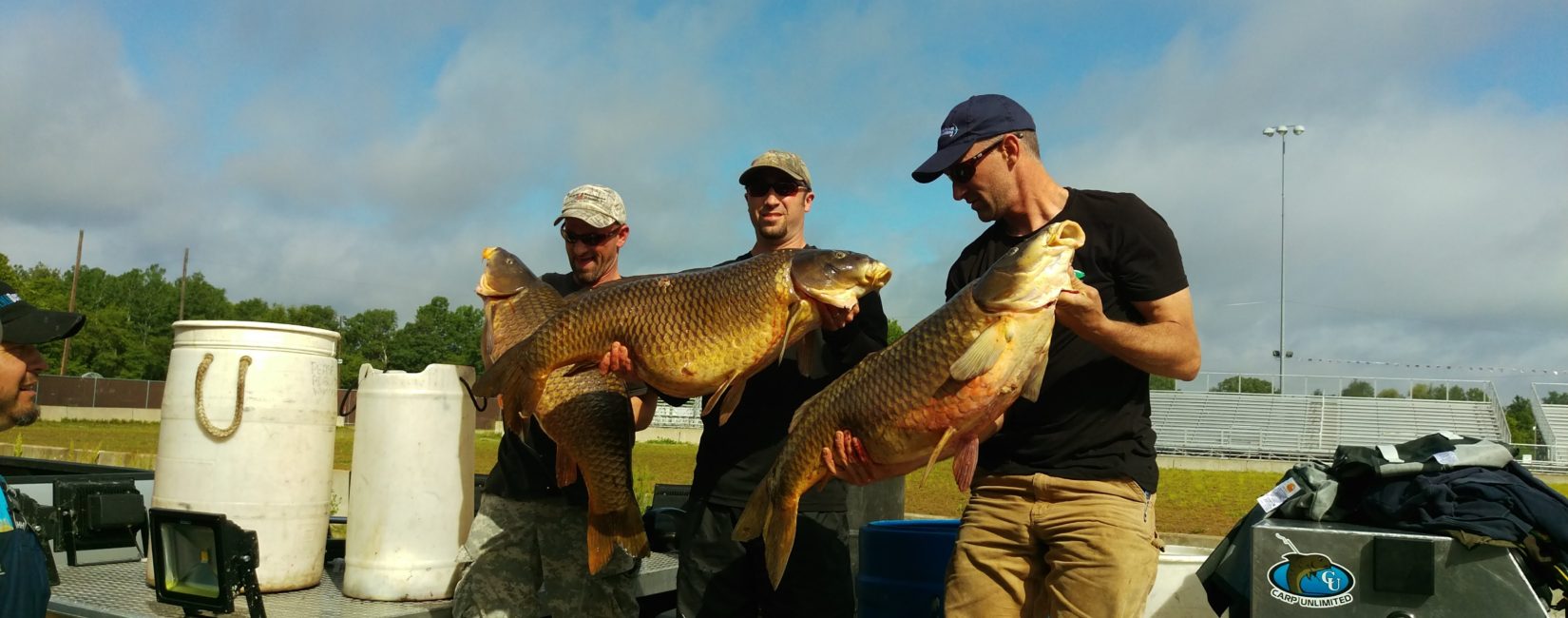
Buffalo taken during one of the tournaments.
Currently the WBA has on going partnerships with several lake groups. These partners can be at one of several levels. First off, the WBA wants to promote the use of bowfishing as an option to help manage existing carp populations. There is little if any natural predation on carp population. Bowfishing can provide a human level of predation.

Several of our partnerships include the annual sponsorship of a tournament each year. These tournaments often include a 25 or 50 cent per fish incentive to fisherman. Often times, lake groups will also pay for the fish disposal. These partnerships are done to encourage the WBA to come and shoot their lakes throughout the year. The Beaver Dam Lake Improvement Association currently sponsors a 50 cent per fish payout throughout the year to WBA members.

The WBA has had cooperative supporting efforts with thefollowing groups:
  • Park Lake Management District
  • Petenwell/Castlerock Property Owners Association
  • Beaver Dam Lake Improvement Association
  • Green Lake Sanitary and Rehabilitation District
Group photo taken after the 2003 State Championship shoot on the Castle Rock Flowage. More than 29,000 pounds of rough fish were taken during the 10 hour shoot.


For more information on these efforts or interest in how we could expand our cooperative efforts, please contact the WBA.

Contact Information:

President:       Lewis Holmes III       715-347-6211


Please remember that the Wisconsin Bowfishing Association built the WBA website to exchange information and have a good time.

All the text and images contained herein are owned by Wisconsin Bowfishing Association and www.wibfa.com and are copyright © 2005. None of the contents of this site may be reproduced or republished.

All photographs, written content or artwork contained within this site are protected by International copyright laws and copyright laws of the United States of America. You may not reproduce or use any photographs, artwork or written content in any form without the express written consent of the Wisconsin Bowfishing Association.

Wisconsin Bowfishing Association appreciates your support and thanks you for visiting www.wibfa.com